

England's 'island nationhood?' with Professor Lorna Hutson
Professor Lorna Hutson considers poets John Milton and Edmund Spenser, as well as English cartographers and lawyers, in the context of an international European concern with whether the seas should be ‘common’ to all nations. In the 17th century, the pressing question for European nations joining the race for overseas commercial empire was that of dominion over the sea, or of whether the sea was, according to the law of nations, res nullius or ‘common property.’
The talk asked how we might rethink Milton’s poetics of English freedom in the context of Anglo-imperial claims over British coastal waters, and revealed the history we suppress when we speak of England in this period as an ‘island nation’.
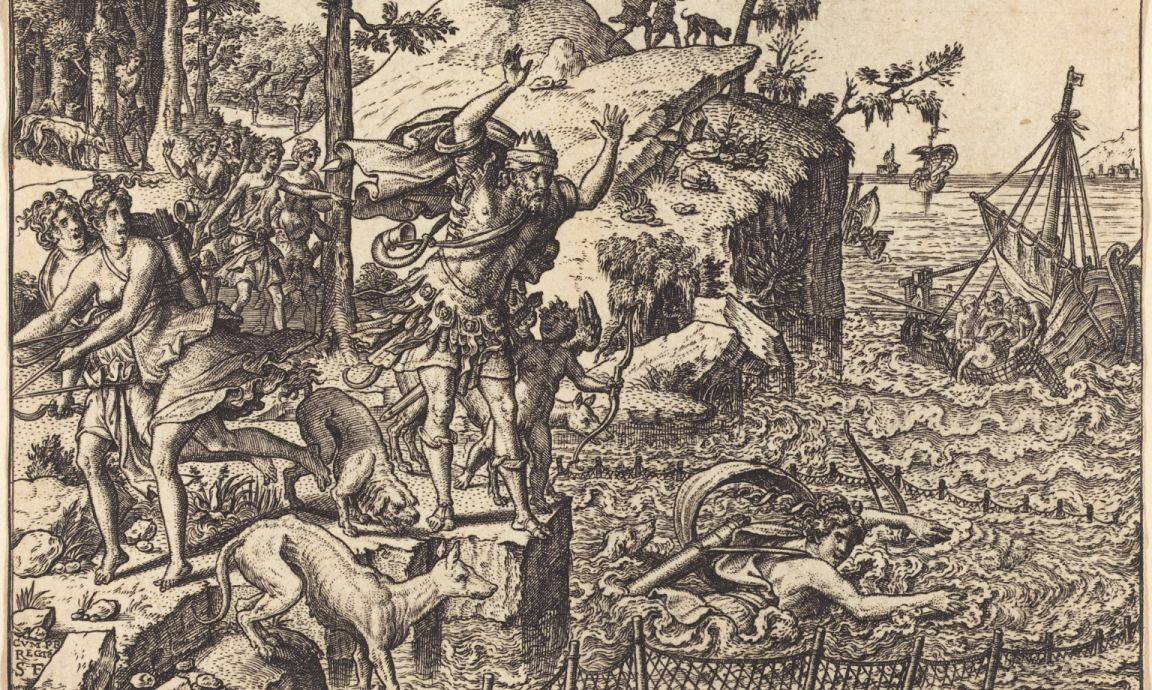
Britomartis jumps into the sea, image courtesy Lorna Hutson
Britomartis jumps into the sea, image courtesy Lorna Hutson
About the speaker
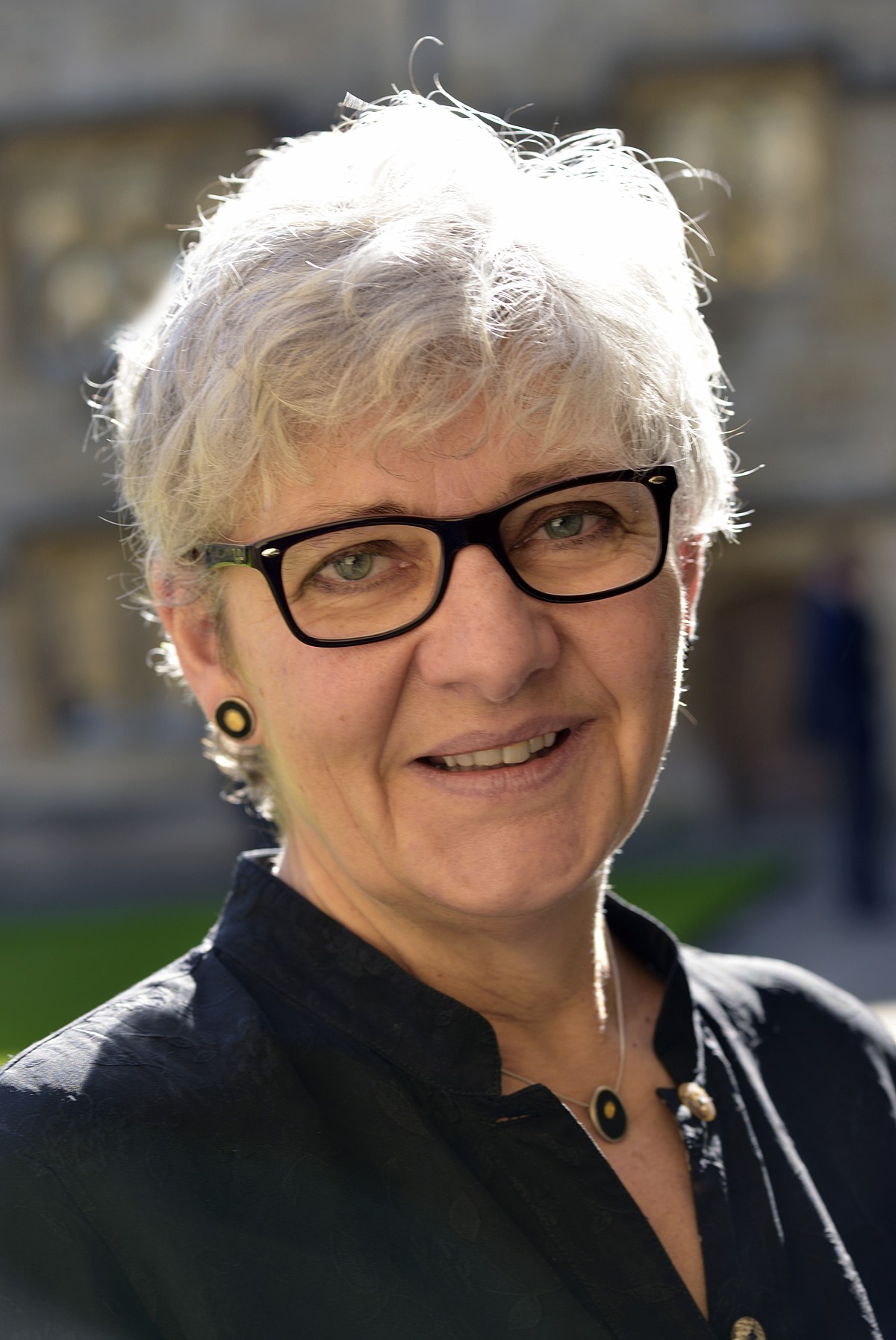
Lorna Hutson is Merton Professor of English Literature at the University of Oxford. She has taught at the Universities of St Andrews, the University of California, the University of Hull and Queen Mary University. Her books include Thomas Nashe in Context, The Usurer’s Daughter, The Invention of Suspicion and Circumstantial Shakespeare. With Victoria Kahn she edited Rhetoric and Law in Early Modern Europe. She is editor of the Oxford Handbook of English Law and Literature 1500-1700. She has held Guggenheim and Leverhulme fellowships, given the Oxford Wells Shakespeare Lectures (2012) and was Alice Griffin Shakespeare Fellow, University of Auckland (2012).
Lorna’s work has explored connections between legal and poetic thinking. The Invention of Suspicion traced innovations in English Renaissance dramaturgy to legal models of evaluating narrative probability, a topic further pursued in Circumstantial Shakespeare. England’s Insular Imagining explores the real-world effects of the poetic, legal and cartographic artifice of England’s imagined island geography. She is currently working, with Katrin Ettenhuber, on a project involving the rethinking of premodern probability.

 Assistance animals welcome

 Hearing induction loop

 Wheelchair accessible
Visit us
Find our opening times, get directions, join a tour, or dine and shop with us.